11 November 1975
Another Day of Life11 November 1975 marks the proclamation of the People’s Republic of Angola in Luanda. In the book, the date’s political force is set against a city emptied by flight and stripped of ordinary order: independence was declared not after the war had ended, but while the front remained active and the people gathered in darkness.
A date shaped by war
The proclamation followed a year of upheaval. After the overthrow of Portugal’s dictatorship, the new rulers granted Angola and Portugal’s other former colonies the right to independence. Fighting among armed political parties had already begun in the spring of 1975, and many people feared that Angola would become isolated in a war without outside help. The declaration therefore arrived not as the resolution of conflict, but as a change in political status inside a conflict still underway.
Luanda before midnight
By the time the date arrived, Luanda had been losing its population and its services. Refugees from across the country gathered around the airport, where people waited for flights without knowing when they would leave or where they would go. In the city, the police had departed; the garbage collectors had also left, and refuse accumulated in streets, squares, and building entrances. These failures altered the setting of the independence announcement: public authority was being asserted at the same time that familiar institutions had withdrawn from everyday life.
On the day of the proclamation, a truck removed the statues of Portuguese conquerors from their pedestals and placed them in rows before the citadel. Foreign delegations arrived by air, though few countries sent representatives. Rumors that a Zaïrean squadron would bomb the airport deterred others; the decision to destroy it, the narrator later learned, had been reversed at the last minute. That night, thousands assembled in a square despite requests to avoid large crowds in case of attack. The scene recalled clandestine meetings, and the sky was dark and cloudy.
The proclamation
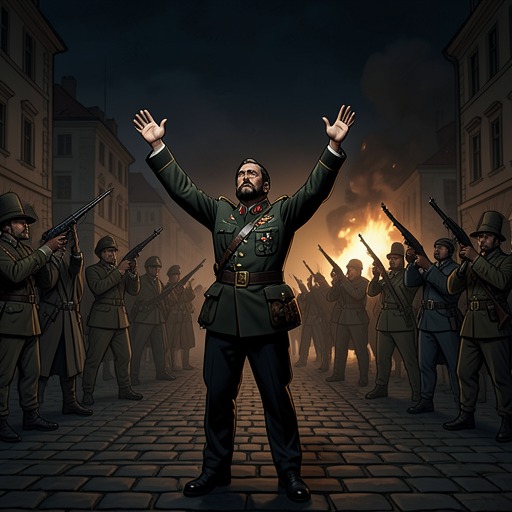
At midnight, the cathedral clock struck twelve. From the platform, Agostinho Neto read the text proclaiming the People’s Republic of Angola. His voice broke, forcing him to pause several times. The crowd, largely invisible in the darkness, applauded and cheered when he finished. No further speeches followed. The platform lights went out, and people dispersed quickly into the dark.
The ceremony coincided with the silence of the northern front, but the quiet did not last across the city. Soldiers began firing into the air in celebration, turning the night into a chaotic uproar. The contrast is central to the book’s account of the date: a formal declaration, delivered in a restrained gathering, was followed by an uncontrolled eruption of sound while the fighting remained unresolved.
After the announcement
At the Tivoli hotel, Oscar brought out champagne and whisky he had kept for the occasion. The hotel’s long-term residents drank together, but the alcohol deepened their fatigue rather than producing sustained celebration. Oscar, already near the limit of his strength, voiced despair about what independence felt like, then fell asleep at the table among the empty glasses. The next morning, foreign delegations attended a reception at Government Palace, and the narrator sent a dispatch to Warsaw.
The date thus joins a national proclamation to scenes of exhaustion, uncertainty, and institutional breakdown. Its significance in the narrative lies in that unresolved conjunction: Angola’s new political beginning was publicly declared, while Luanda remained vulnerable, the fronts were active, and even the people who had waited for independence could not experience the moment as uncomplicated triumph.